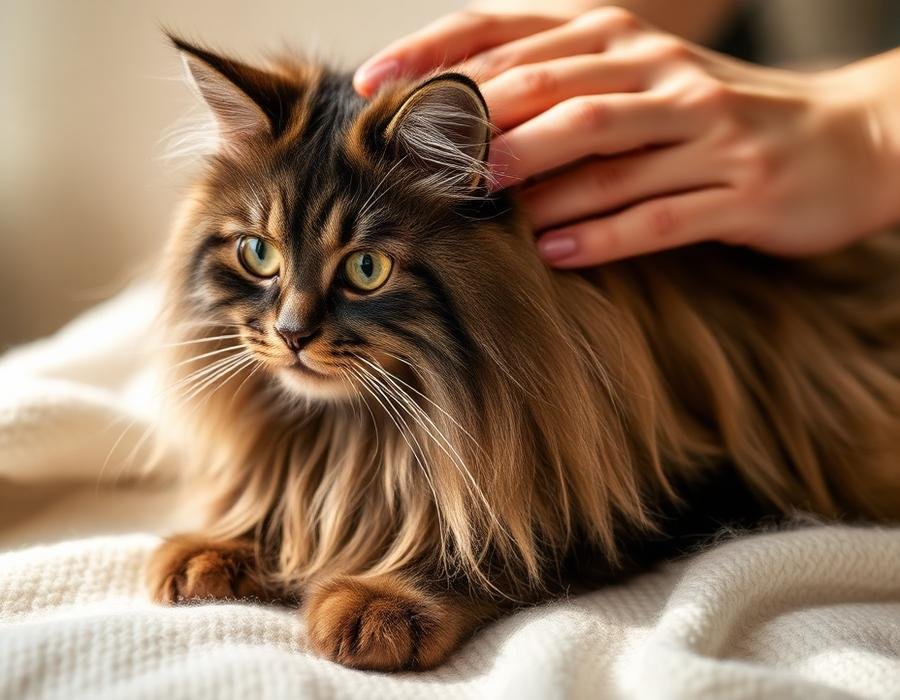
Brushing a Cat Who Hates Being Brushed
Most brushing battles are really pacing problems. Thirty focused seconds every day beats a twenty-minute wrestling match every fortnight, and the right tool for your cat’s coat matters more than how much the tool costs.
Why Cats Resist Brushing
Brushing feels like restraint to a cat who has not learned to enjoy it. A cat pinned in place, brushed against the direction of growth, or brushed somewhere sensitive (the belly, the base of the tail) will remember that discomfort the next time the brush appears. The goal is to build a track record of short, comfortable sessions so the brush stops predicting something unpleasant.
Match the Tool to the Coat
- Short-haired cats: a rubber curry brush or grooming glove removes loose hair without pulling.
- Medium and long-haired cats: a slicker brush handles the undercoat, followed by a wide-tooth comb for the finish.
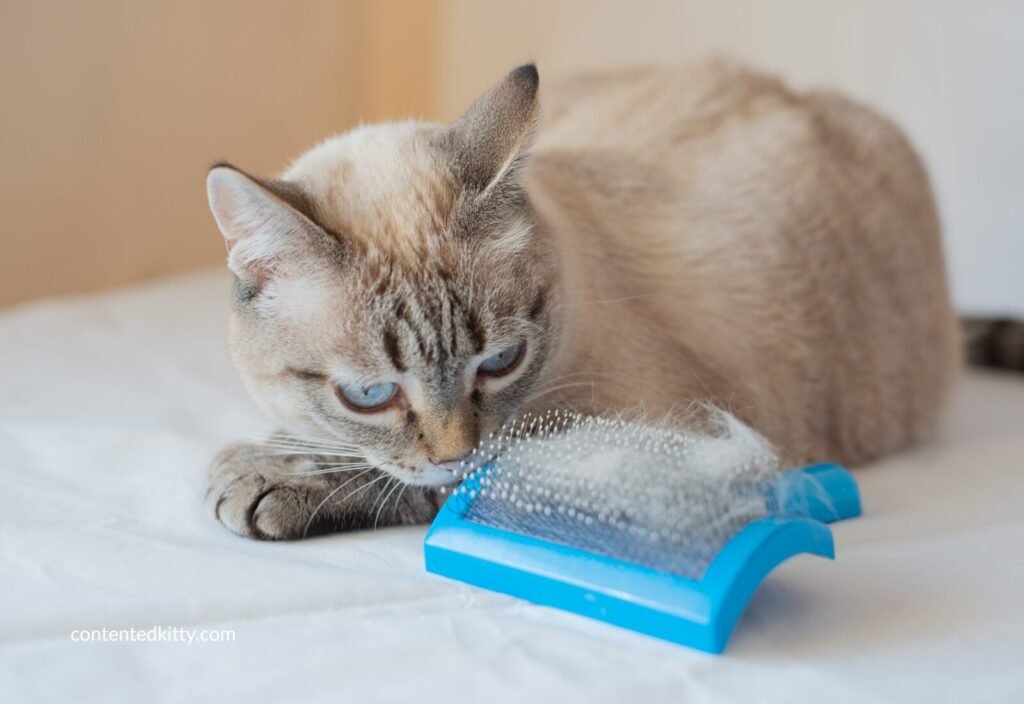
- Self-cleaning slicker brushes (bristles retract with a button) make cleanup faster and are worth the small premium if you brush daily.
- Cats who resist any brush sometimes tolerate a grooming glove first, since it feels closer to petting.
A Low-Stress Routine
- Brush when your cat is already relaxed, not when the mats appear.
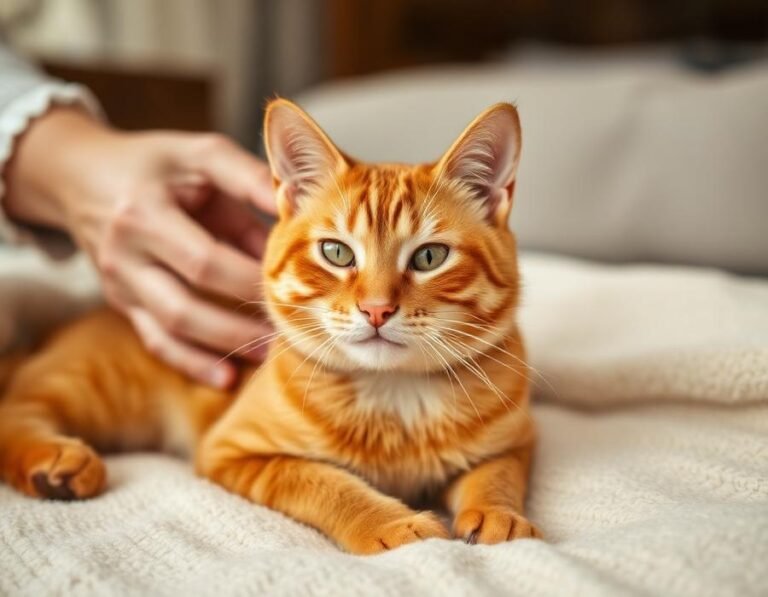
- Start where your cat likes being touched (usually the cheeks, chin, or shoulders) and work outward.
- Stop before your cat asks you to. Ending on a good note matters more than finishing the whole coat in one sitting.
- Pair brushing with a treat or a meal so the session ends with something your cat wants.
Reading the Warning Signs
A tail that starts flicking, ears that flatten, or skin that ripples along the back are all signals to stop for now. Pushing through these signs teaches a cat that the brush is worth fighting, which makes the next session harder, not easier.
Mats close to the skin need a professional
A mat that is tight against the skin can be difficult and painful to remove at home, and cutting it out yourself risks nicking the skin underneath. This is a job for a groomer or veterinarian, not a home haircut.
Frequently Asked Questions
How often should I brush my cat?
Short-haired cats generally do well with a weekly brush, while long-haired cats benefit from a few short sessions a week to prevent mats from forming in the first place.
Why does my cat bite the brush?
Play-biting a brush is usually overstimulation rather than aggression. It is a good cue to shorten the session or switch to a gentler tool.
Is a deshedding tool safe to use often?
Deshedding tools that reach the undercoat should be used sparingly, roughly once every week or two, since overuse can irritate the skin. A regular slicker brush or comb is fine for more frequent use.
What if my cat will not tolerate brushing at all?
Start with a grooming glove during petting, with no brushing goal at all, and let actual brushing follow once the glove itself is well tolerated. A veterinarian or groomer can help with a cat who will not accept any handling.
Sources and references
- Add a grooming reference here (placeholder)
Contented Kitty may earn a commission from qualifying purchases at no additional cost to you. Contented Kitty provides general educational information only. It does not diagnose conditions and is not a substitute for care from a licensed veterinarian. Always speak to your own vet about your cat.